
Short answer: The Freedom 250 Grand Prix is the first-ever NTT INDYCAR SERIES race on the National Mall, and it is bringing the most disruptive road closure event downtown DC has seen in years, stretching from mid-July through mid-September. A booked car service with a chauffeur who already knows the closure map is the only way to get near the Mall on race weekend without losing half your day to detours, checkpoints, and a parking search that ends in a tow. Here is exactly what is closing, when, and how to still make it to the race without the headache.
What the Freedom 250 Grand Prix Actually Is
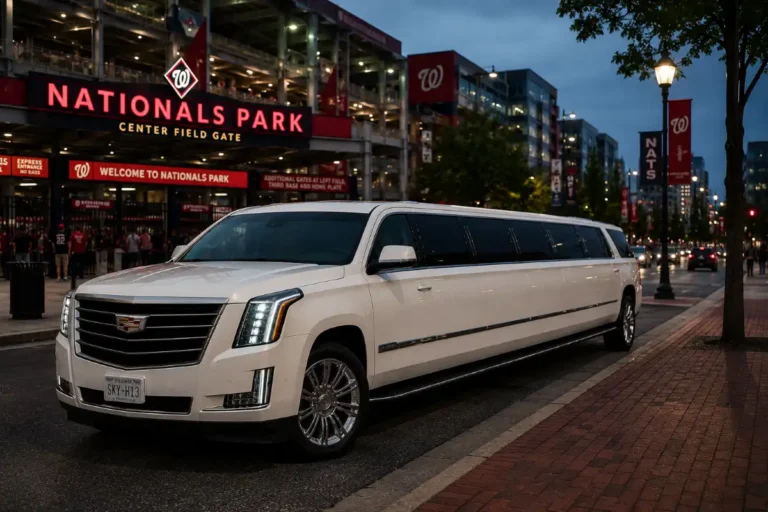
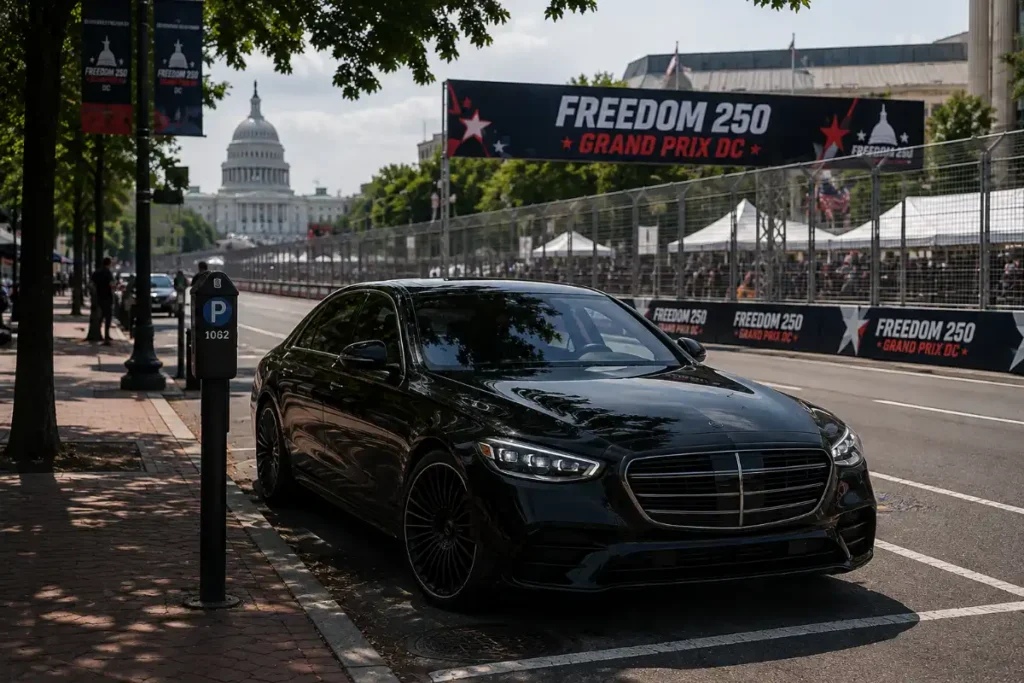
If you have not been following the buildup, here is the short version. The Freedom 250 Grand Prix DC Car Service of Washington, DC takes place August 22 and 23, 2026, and it is the first INDYCAR race ever run on the National Mall. The 1.7-mile, seven-turn street circuit loops past the Washington Monument and the U.S. Capitol, which means the cars are racing through the exact postcard view every visitor comes to DC to see. The event is part of the official America 250 commemoration, run in coordination with INDYCAR, the U.S. Department of Transportation, the National Park Service, and the Mayor’s office, and Sunday’s race is broadcast live on FOX.
The numbers explain why the road closures are so extensive. Roughly 260,000 tickets have already been distributed, with an estimated 140,000 attendees expected each day of the two-day event. That is a stadium-sized crowd converging on a stretch of the city that was never built to handle that kind of volume, layered on top of the security footprint for an event with Secret Service, DC police, U.S. Park Police, and FBI involvement. Local reporting has put it bluntly: avoid driving downtown in August if you possibly can.
The Road Closure Timeline You Actually Need
This is the part most visitors get wrong. The Freedom 250 Grand Prix is not a one-weekend event from a traffic standpoint. It is a two-month disruption with four distinct phases, and knowing which phase you are booking transportation for changes what your chauffeur needs to plan around.
Buildout, July 22 through August 14. Parking lanes, curb lanes, and partial travel lanes close along city streets near the course to support construction of the track and viewing areas. Roads stay open, but lanes and parking are reduced, and this is already in effect.
Long-term no-parking zones, July 12 through September 15. Streets including 3rd Street and 7th Street near the Mall are posted emergency no parking for the entire window. Cars left in these zones during this period get ticketed and towed, no exceptions.
Extended emergency no-parking, August 1 through September 3. A wider ring closes to parking, including stretches of Pennsylvania Avenue, Constitution Avenue, 6th Street, 7th Street, and Independence Avenue.
Full race-weekend lockdown, August 21 through August 23. This is the tightest window, and it comes in two overlapping layers. Starting at 3 a.m. on Friday, August 21 and running through 11:59 p.m. on Sunday, August 23, Pennsylvania Avenue from 14th Street to 11th Street NW, along with 11th, 12th, and 13th Streets between E Street and Pennsylvania Avenue, drop to local traffic only, meaning residents, parking garages, and deliveries can still get through but nobody is cutting across as a shortcut. Layered on top of that, a smaller core, including 12th Street between Pennsylvania and Constitution Avenues, closes to all vehicle traffic outright for the same window, and the 12th Street Expressway exit off westbound I-395 shuts down entirely, with that traffic rerouted west toward Maine Avenue instead. If you normally use that exit to get downtown, plan on a different route for the whole weekend.
Breakdown, August 24 through September 3. The same reduced-lane conditions from the buildout phase return as the course comes apart, so do not assume the disruption ends the moment the checkered flag drops on Sunday. Some of the emergency no-parking postings on streets like 3rd and 7th actually run all the way through September 15, well after the cars have left town.
Officials have been direct about the scale of this: expect a large, visible law enforcement presence throughout the event footprint, drawing on the Secret Service, DC police, U.S. Park Police, and the FBI, and expect the posted closure map to shift as the date gets closer. A chauffeur checking the current restrictions the morning of your trip is doing something a static map or a GPS app cached from last week cannot.
Why a Chauffeur Wins This Particular Weekend
Any normal DC event, you could talk yourself into driving and hunting for a garage. The Freedom 250 Grand Prix is different, and here is why a professional car service actually matters here instead of being a nice-to-have.
A chauffeur who works this city every day is already tracking which blocks are local-access-only versus fully closed, which is not something a GPS app updates in real time when the restriction zone shifts by the day. Rideshare pricing, meanwhile, is going to behave exactly the way it did during the World Cup fan zone and the BBQ Battle crowds this summer, except worse, because you are adding INDYCAR’s national broadcast audience on top of DC’s usual weekend traffic. A flat rate booked in advance means the chauffeur absorbs the routing problem instead of you watching a fare double while stuck at a checkpoint.
There is also the walk-in factor. With the core closure zone locked to local traffic only, everyone attending is walking the final several blocks regardless of how they arrive. The difference is whether that walk starts from a garage three-quarters of a mile away that you have been circling for forty minutes, or from a curb your driver picked based on which access point is actually open that day.
Getting to the National Mall From Across the DMV
Race weekend traffic does not stay contained to downtown. Expect ripple effects on the approaches from Loudoun County, Fairfax County, Arlington, and the Maryland side coming in from Bethesda and Silver Spring, since everyone funneling toward the same handful of open access points creates backups well outside the closure zone itself. A Washington DC car service that starts your trip already knowing which bridges and approach routes are moving that day saves real time before you even reach the perimeter.
If you are coming from further out in the region, the same logic applies whether you are headed in for the race itself or for one of the many events running in DC that same August weekend. A pre-booked pickup means your driver, not you, is the one adjusting the route in real time.
Groups, Corporate Hospitality & VIP Access
An event with this much national attention draws exactly the kind of crowd that books hospitality suites, corporate viewing packages, and group outings, and the security perimeter makes solo, uncoordinated arrivals genuinely painful for larger parties. If you are organizing a client group, a corporate hospitality tent, or an executive outing to the race, conference and group transportation keeps everyone arriving together at a single coordinated drop point instead of scattering across the closure zone trying to find each other. For principals, dignitaries, and high-profile executives attending given the heavy federal security presence around the event, executive protection transport pairs a trained chauffeur with the same discretion standard we bring to embassy and government clients year-round.
You Do Not Have to Be Going to the Race for This to Affect You
Here is the part that catches a lot of people off guard: you do not need a ticket to the Freedom 250 Grand Prix for this event to rearrange your week. If you work downtown, have a client meeting near Federal Triangle, or simply live within walking distance of the closure zone, the extended no-parking postings and reduced travel lanes have already been in effect since late July, weeks before a single car takes the track. Law firms, lobbying shops, and federal agencies near Pennsylvania Avenue are dealing with disrupted commutes and visitor access for a solid two months, not two days.
That is exactly the kind of stretch where a standing arrangement with a corporate car service pays for itself. Instead of your team individually gambling on whether their usual route or garage is still open on a given morning, a chauffeur is handling that variable for everyone, day after day, for the full closure window. If your business runs regular trips through the affected corridor this summer, this is a good moment to set that up rather than improvising it fresh every morning the closure map changes.
Flying in for Race Weekend
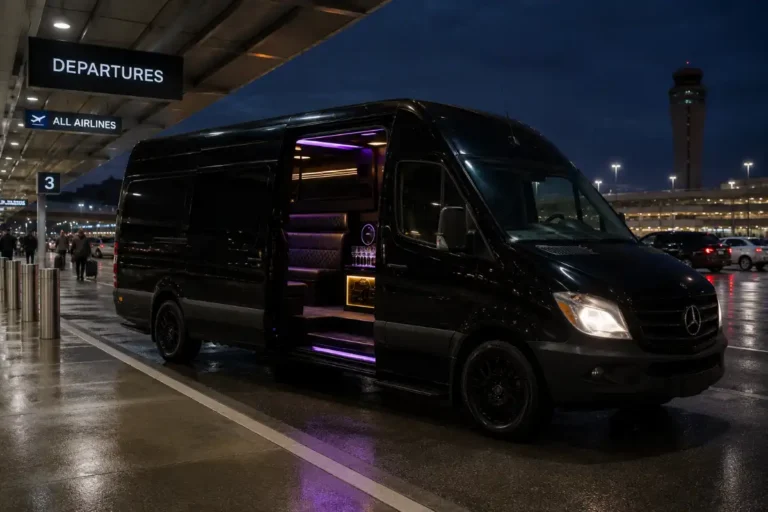
With a broadcast audience and a stadium-sized daily crowd, plenty of visitors are flying into the DMV specifically for the Freedom 250. If that is you, book the airport leg the same way you would book the race-day leg. We track flights in real time at Dulles (IAD), Reagan National (DCA), and BWI, so your chauffeur is already positioned when you land, whenever that actually happens. Given that DCA sits closest to the closure zone, expect ground transportation options there to be under even more pressure than usual that weekend, which makes a confirmed reservation more valuable than it would be on a normal Saturday.
Frequently Asked Questions
When is the Freedom 250 Grand Prix and where does it take place?
The race runs Saturday, August 22 and Sunday, August 23, 2026, on a 1.7-mile street circuit around the National Mall, passing the Washington Monument and the U.S. Capitol. Sunday’s race broadcasts live on FOX.
What roads are closed for the Freedom 250 Grand Prix?
Closures happen in phases. Reduced lanes and parking began in mid-July for buildout, an extended no-parking zone covers Pennsylvania Avenue, Constitution Avenue, and several cross streets from August 1 through September 3, and the tightest restrictions hit August 21 through 23, when core blocks around the course close to through traffic entirely or restrict access to local traffic only.
Is it hard to drive near the National Mall during the Freedom 250 Grand Prix?
Yes. Officials have directly advised avoiding downtown driving during the event where possible, and with the core zone restricted to local access only during race weekend, anyone visiting is walking the final blocks regardless of how they arrive. A car service drop-off near an open access point is significantly more efficient than searching for parking.
Should I book a car service for the Freedom 250 Grand Prix even if I only need a short ride?
For this specific event, yes. The combination of a stadium-sized daily crowd, a rotating closure map, and rideshare surge pricing means even a short trip downtown that weekend is likely to take far longer and cost more than usual without advance planning.
Can Skyhawk Limousine handle group or corporate transportation for race weekend?
Yes. We coordinate group arrivals for corporate hospitality outings and larger parties so everyone reaches the venue together, and we offer executive protection transport for principals and VIPs attending given the elevated security presence around the event.
Do the road closures only affect people attending the race?
No. Extended no-parking zones and reduced travel lanes near Pennsylvania Avenue and the National Mall have been in effect since late July for event buildout, well before race weekend itself, and some restrictions continue through mid-September. Anyone who works, lives, or has business near the affected corridor will feel the impact regardless of whether they attend the race.
Is the I-395 exit near the National Mall closed for the Freedom 250 Grand Prix?
Yes, for the core race-weekend window. The 12th Street Expressway exit from westbound I-395 closes from 3 a.m. Friday, August 21 through 11:59 p.m. Sunday, August 23, with traffic rerouted west toward Maine Avenue. Drivers who normally use that exit to reach downtown should plan an alternate route for the entire weekend.
The Bottom Line on Freedom 250 Grand Prix Weekend
Washington has hosted plenty of big events on the National Mall before, but nothing quite like this. A first-ever INDYCAR race, a two-month closure footprint, 260,000 tickets already in circulation, and a security presence pulling in the Secret Service, DC police, U.S. Park Police, and the FBI all at once. This is not the kind of weekend where you show up, wing it, and hope a parking spot opens near 12th Street. By the time you are circling for a garage, the block you wanted was probably closed to vehicle traffic an hour earlier than the sign suggested.
The good news is that none of this actually has to be your problem to solve. The closure map, the local-access-only zones, the rerouted I-395 exit, the rideshare surge that is coming whether you plan for it or not, that is exactly the kind of moving target a chauffeur who works this city every day is built to handle. You watch the race. We watch the road closures.
And because the disruption started weeks before the checkered flag and runs weeks after it, this is not a one-and-done booking decision either. Whether you need one ride to the Mall on Saturday, airport pickup for out-of-town guests flying in for the broadcast, a coordinated arrival for a corporate hospitality group, or a standing arrangement to get your team through downtown for the full closure window, the earlier you lock it in, the more of the good pickup windows and open access points are still available to book around.
Do not wait until race week to figure out your route. Get a flat-rate quote for your Freedom 250 Grand Prix car service from Skyhawk Limousine today, and let a chauffeur who already knows which blocks are open, which are local-access-only, and which are closed outright handle the logistics, so the only thing on your mind come August 22 is the race itself. Call (703) 266-8018 or reserve online in about a minute.
Watching history made on the National Mall this August? Get a flat-rate quote from Skyhawk Limousine and let a chauffeur who already knows the closure map handle the Freedom 250 Grand Prix, so the only thing you have to track is the race. See us on Instagram & Google.